Credit: Photo by Ben Woods
In 2019, at Grosvenor Park United Church, Geraldine the Donkey came out to the congregation.
With a letter, Geraldine told the congregation that they did not fit into the male/female binary. While they were unsure whether they identified more closely with the term non-binary or the term genderfluid, they were certain that they wanted to use they/them pronouns.
Credit: Photo by Ben Woods
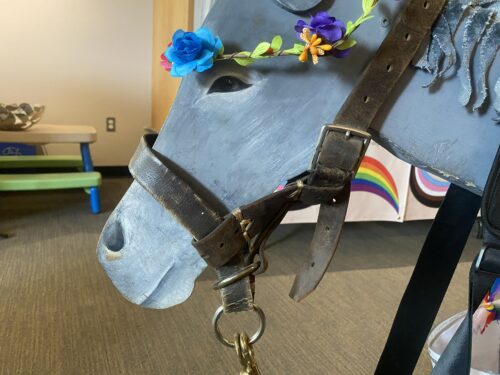
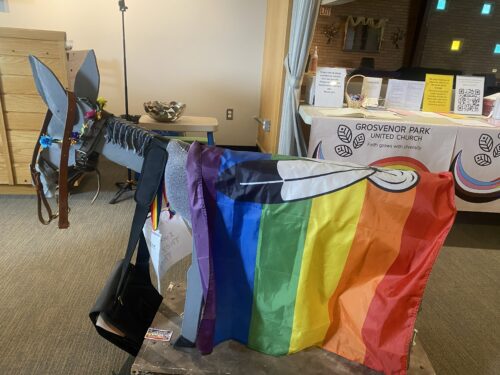
Geraldine is a wooden donkey on wheels, originally crafted to use when telling the nativity story. Their coming out letter was presented through a skit performed by Rev. Nobuko Iwai and a member of the congregation and Affirming Ministry Committee. In the letter, Geraldine emphasized “I am still the same Geraldine you know and love.” They also asked that the congregation keep an open mind even if they do not understand what’s so important about labels and pronouns.
While it would be ideal to live in a world where all coming out goes smoothly, the reality is that some reactions can be negative. Sometimes, people feel upset or confused upon learning a loved one is queer. In the case of a changed name or pronouns, they might get it wrong or worry they will say something offensive. In the skit, Nobuko took on this role. She acted upset at first and didn’t understand why Geraldine was changing their pronouns, then worried about getting the pronouns wrong or Geraldine getting angry.
The other participant in the skit corrected Nobuko when she called Geraldine “she” instead of “they,” and reassured her that Geraldine just wants Nobuko to try even if it’s difficult to remember at first. They also reminded her that “Jesus calls us to love our neighbours, especially donkeys like Geraldine.”
By the end of the skit, Nobuko still struggled with Geraldine’s pronouns. Rather than growing flustered, she quickly corrected herself: “Could you take her, no, them for a rest at the back?”
This skit highlights that we can love someone very much and still get things wrong or hurt them, even unintentionally. More importantly though, it shows how important it is to try. In the case of using the correct pronouns, it models how to fix mistakes. Most transgender and non-binary people do not want much attention drawn to accidental misgendering, they simply want the mistake to be corrected and then to move on.
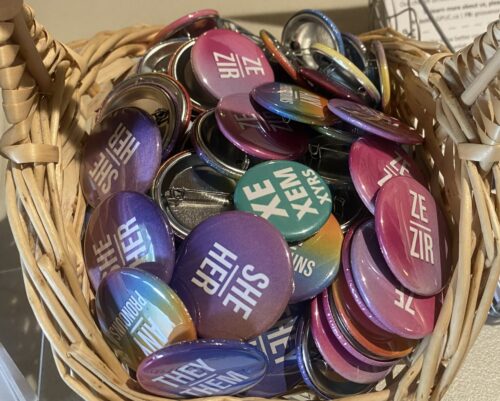
To help people remember, Geraldine is fitted with a large sign reading “My name is Geraldine. My pronouns are They/Them/Theirs.” This sign is similar to pronoun pins which have grown in popularity in recent years. Grosvenor Park has a basket of pronoun pins for the congregation to use.
Credit: Photo by Ben Woods
The congregation is encouraged to use a pin even if they are not transgender or non-binary; Nobuko wears a “she/her” pin. By sharing their pronouns, cisgender people can create a space where transgender and non-binary people feel safe to share their own pronouns and demonstrates allyship. Using a pronoun pin also means that we don’t have to make assumptions or ask someone about their pronouns. Since bringing in the basket of pins, it has been refilled multiple times.
Geraldine has been useful for ministry with all ages. They’re popular with kids who are even invited to go for a ride, but also very important for adults, especially those who are less familiar with different pronouns. Geraldine allows for all ages to practice using they/them pronouns and practice correcting themselves if they use the wrong pronoun. Importantly, if someone does use the wrong pronouns for Geraldine, there’s no risk of a real person feeling hurt.
Nobuko says that, at Grosvenor, they don’t want someone to be “so afraid of getting it wrong that they don’t try.” Sheila Catto says that some people make a mistake once and “just don’t use any pronouns for that person for a month until they feel more comfortable they’ll get it right.” This attempt is often misguided and can make the person who was misgendered feel singled out. The goal of Geraldine’s coming out and the pronoun pins are to encourage everyone to keep trying to get it right.
Nobuko also says, “Some people may never completely understand, but they understand that they’re trying to be kind.”
-Ben Woods is the 2026 Summer Resource and Connections Coordinator for Living Skies Region